

Overview
.avif)
.avif)
AI Sales Coaching: Buyer-Validated Coaching for Revenue Teams
AI sales coaching that goes beyond call scoring. Learn a Buyer-Validated approach using buyer signals and deal outcomes, with practical steps for reps and managers.
.webp)
There’s a moment most reps (and managers) recognize.
A rep finishes a call that felt decent. The buyer asked thoughtful questions. Nobody pushed back hard. The rep sends a careful follow-up. Then, the deal goes quiet. Replies slow down. Meetings get postponed. No additional stakeholders show up.
In the next one-on-one, the manager is trying to be helpful, but they are also juggling a forecast call, escalations, and three other reps who “need coaching.” The feedback is familiar: “Create more urgency.” “Tighten qualification.” “Build a champion.”
Everyone means well. But nobody leaves with clarity on the one specific thing to do differently next time.
That gap is what AI sales coaching can close when it’s done right, not by grading calls, but by giving reps specific, situation-aware guidance and by helping managers spend limited coaching time on the few things that actually change outcomes.
A meta-analysis of coaching in organizational settings found significant positive effects across outcomes such as performance and skills, as well as goal-directed self-regulation (with effect sizes reported across categories). The question isn’t “does coaching work?” The question is “can we deliver it consistently, in context, without burning out managers and reps?”
If you zoom out, the missing ingredient is usually evidence. Most coaching is built on partial memory (“I listened to two calls”), generic rubrics, or process compliance. When coaching isn’t tied to what buyers actually do and what deals actually do next, it’s easy for it to feel irrelevant.
To make coaching more specific and more fair — whether you’re coaching yourself or others — we use a simple standard throughout this guide:
Buyer-Validated Coaching
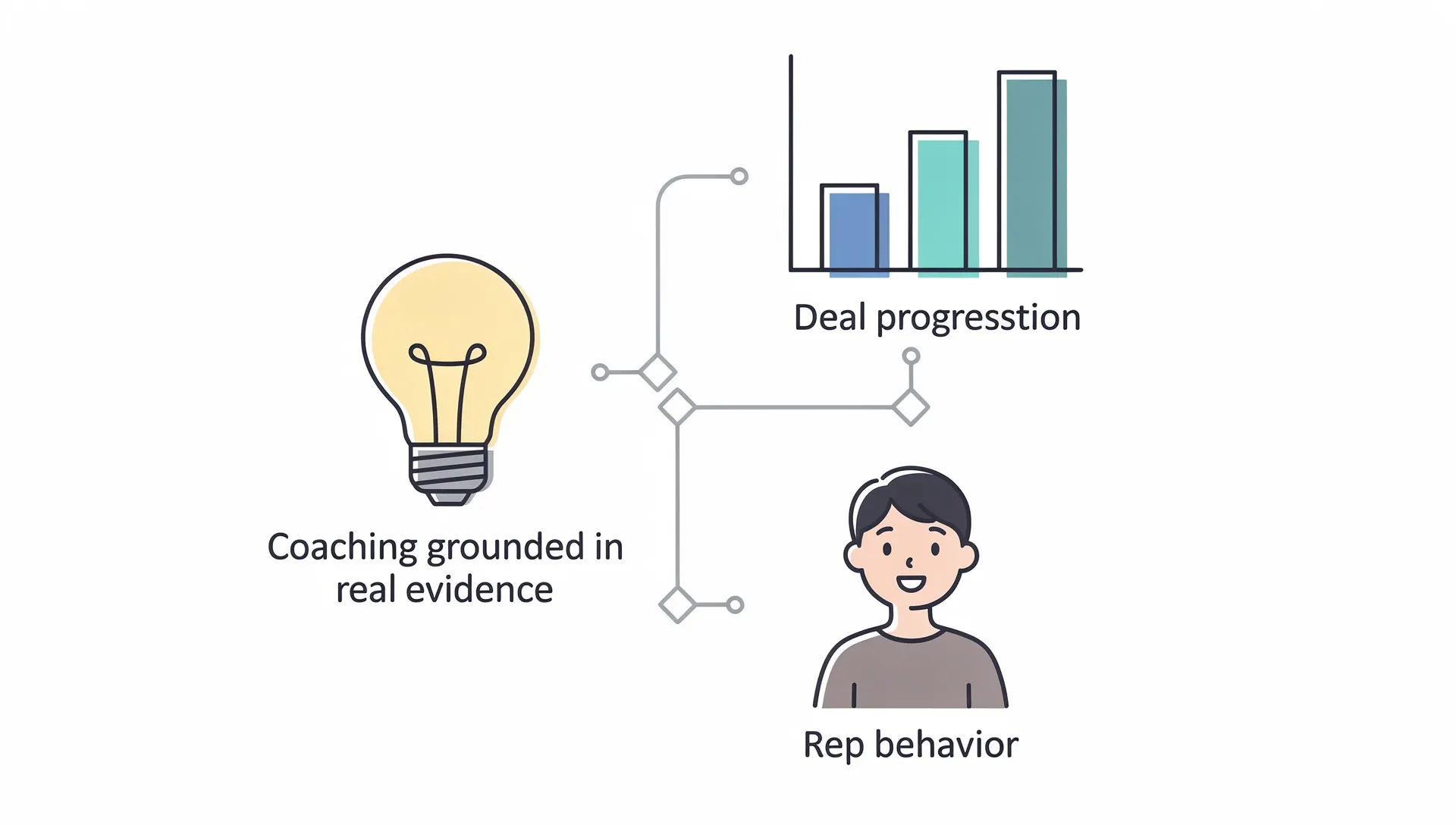
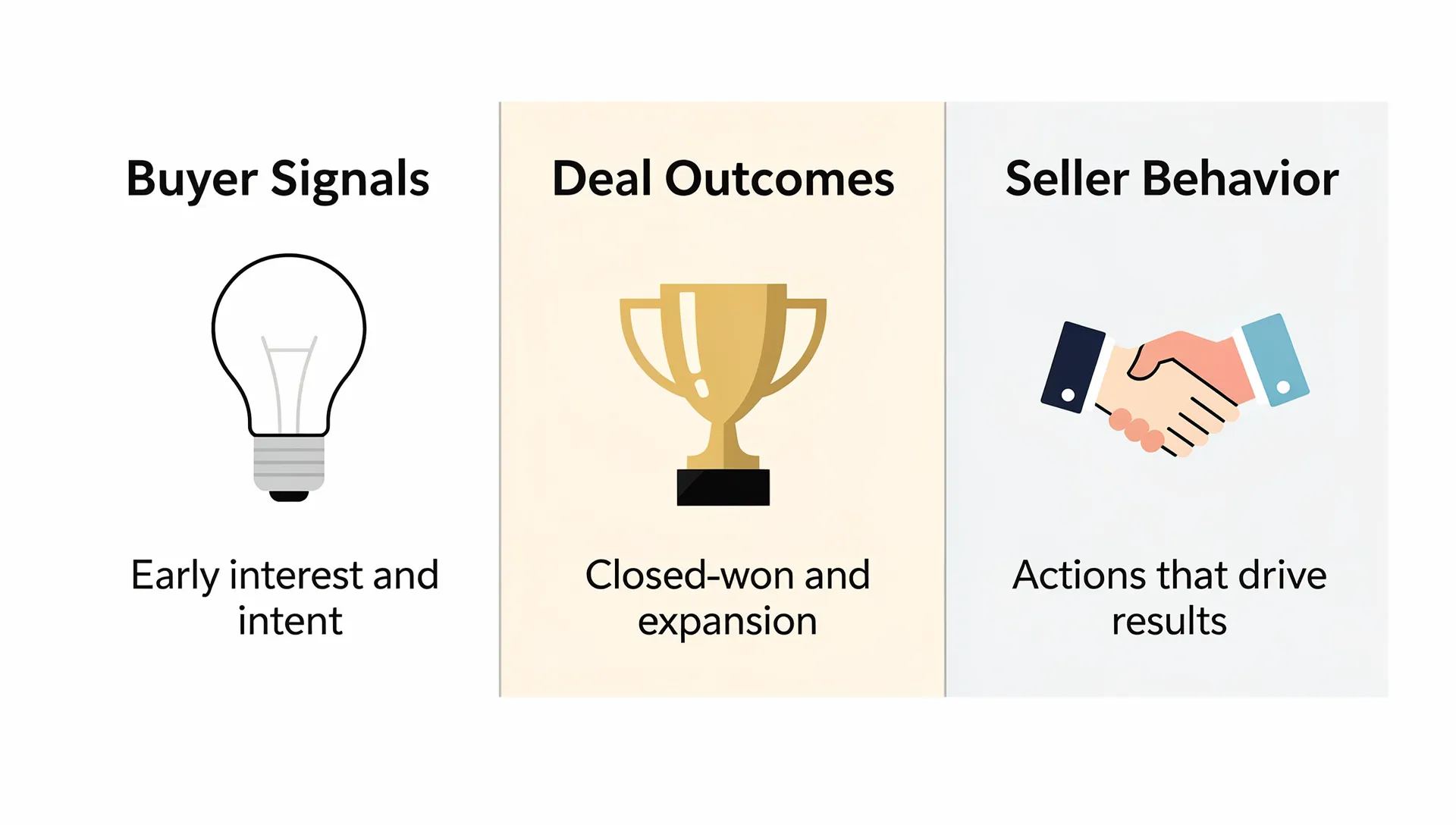
Buyer-Validated Coaching is coaching grounded in three types of evidence at once:
- Buyer engagement signals (what buyers actually do)
- Deal outcomes over time (what happens next)
- Seller behavior in context (what the rep did and said, relative to the situation)
Most “AI coaching” overweights seller behavior and process compliance. Buyer-Validated Coaching uses buyer engagement and outcomes as the validation layer, so coaching feels more relevant, more actionable, and less judgmental.
Intersight is designed around this philosophy. We don’t want coaching to stop at “here’s what happened.” We want it to become “here’s what changed, why it matters, and what to do next.”
What Is AI Sales Coaching?
AI sales coaching is support that helps sellers improve skills and decisions using real context from their deals, interactions, and buyer behavior.
Done well, it helps you improve two things:
It improves how you sell (skills and communication).
It improves how you run deals (qualification, momentum, risk, and next steps).
The best systems do not just summarize meetings. They help you notice patterns across time, diagnose what is happening in a deal, and translate that into a specific next move a rep can execute.
What AI sales coaching is not
AI sales coaching is not primarily call scoring. It is not a generic rubric that tells a rep they were “good” or “bad.” It is not a compliance engine that rewards people for checking boxes.
Process matters, but compliance is not the goal. The goal is to improve judgment, strengthen communication, and ensure more consistent deal execution.
The Skeptic’s Take: “AI Can’t Be Better Than Me”
If you’re an experienced seller or manager, skepticism is healthy. The resistance often sounds like:
- “I already know what I’m doing. AI can’t understand my deals better than I can.”
- “My team doesn’t need more tools. We need better execution.”
- “AI will just produce generic advice and create noise.”
Here’s the alternative paradigm to consider:
AI doesn’t need to be better than you. It needs to be more consistent than you.
Great reps still miss patterns across dozens of deals. Great managers still coach unevenly because time and attention are finite. AI’s role is to support the consistency layer: surfacing early signals, summarizing recurring patterns, and reducing the amount of “guessing” that shows up as generic coaching.
Gartner reported that sellers who effectively partner with AI tools were 3.7x more likely to meet quota than those who do not.
AI should be a second set of eyes, not a judge.
If the tool feels like it’s “grading you,” it will create defensiveness. If it feels like it’s helping you notice what you’d otherwise miss, it builds trust.
AI should triage coaching, not replace it.
Salesforce research also suggests that leading teams are outperforming on intelligent selling capabilities. Their State of Sales report notes high-performing teams are 3.4x more likely to use AI, and high performers using intelligent capabilities are 10.5x more likely than underperformers to report a major positive impact on forecast accuracy.
The win is not “AI knows more than a great seller.” The win is “AI makes coaching and execution more consistent.”
Sales coaching is one of the highest-leverage inputs in performance, and most teams still struggle to deliver it consistently for predictable reasons.
Manager's time is limited. Coaching competes with forecasting, hiring, escalations, and internal work.
Coaching quality varies. Some managers coach well. Others coach to process. Others avoid tough conversations.
Feedback triggers defensiveness. If coaching feels like judgment, reps avoid it. When reps avoid it, skill development slows down.
Manual call review doesn’t scale. Even strong managers can’t listen to enough calls to see patterns across time. They catch moments and miss trends.
AI sales coaching matters because it can raise the coaching floor: more consistency, more specificity, less dependence on heroic effort.
If your organization is trying to scale coaching without breaking people, this article may also resonate: people-first AI sales enablement.
Why “AI Coaching” Often Disappoints
Many teams try “AI coaching” and come away unimpressed. Usually, that’s not because the concept is wrong. It’s because the implementation is shallow.
Here are the most common failure modes:
The coaching is generic. It provides advice that applies to any rep in any industry (“ask better questions,” “create urgency”), which means it changes nothing.
It focuses on the wrong evidence. It overweights the rep's actions on a single call and underweights buyer engagement and deal outcomes over time.
It stops at insight. It highlights interesting moments but doesn’t help the rep execute the next step, draft the message, or update the deal reality.
Intersight’s point of view is simple: Execution quality is what matters. If the coaching doesn’t reliably lead to better actions, it’s not coaching. It’s commentary.
The Two Modes of AI Sales Coaching
AI coaching can serve reps and managers and work in two different modes.
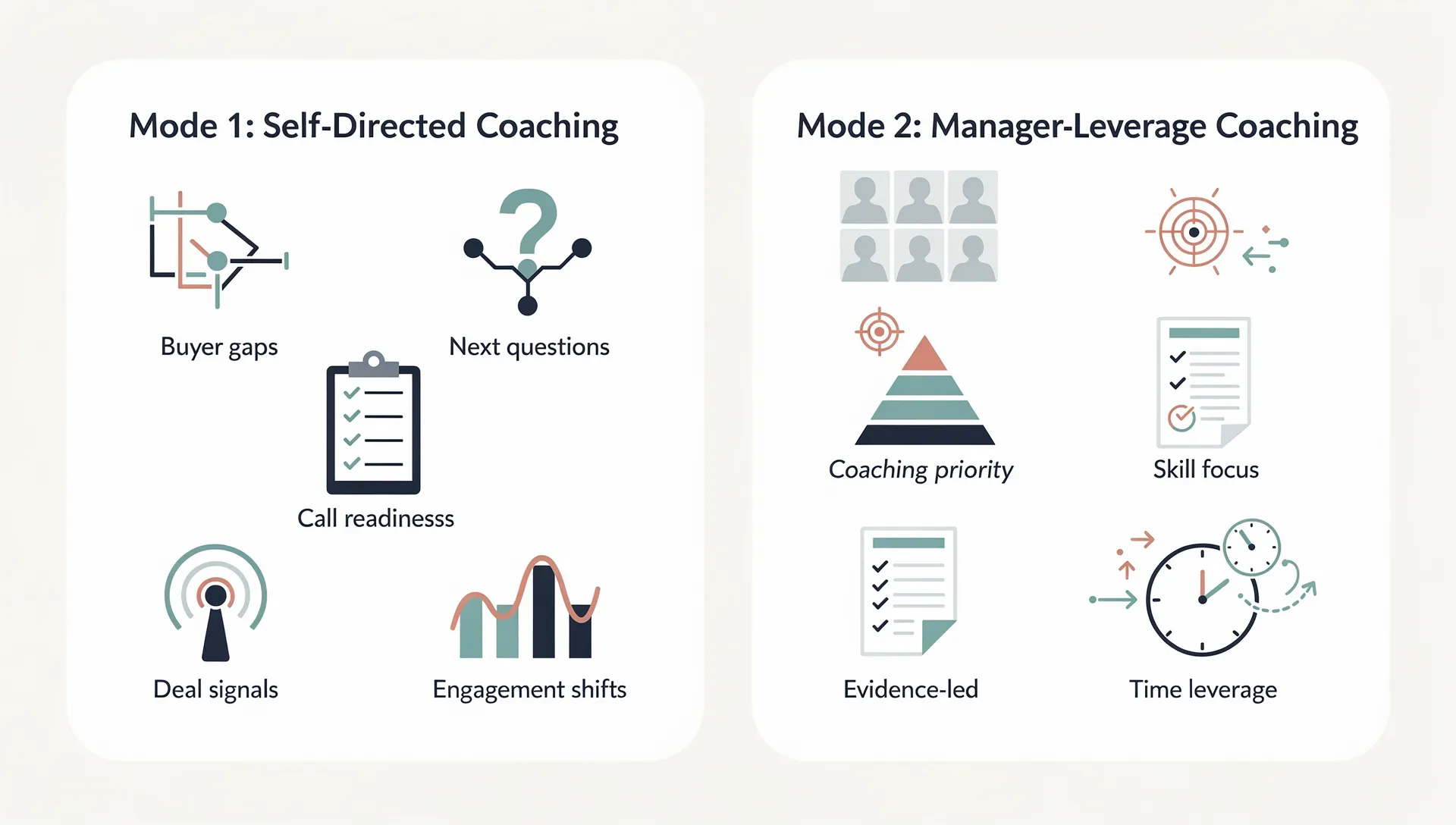
Mode 1: Self-directed coaching for every rep
One of the biggest opportunities to use AI well is giving every rep a way to improve on demand, privately, in the flow of work.
Self-serve AI coaching should help reps:
- Identify what’s unresolved in the buyer’s mind (and what to address next)
- Ask sharper qualification questions to determine whether this is a genuine buyer with internal alignment.
- Reduce “I’ll wing it” moments before high-stakes calls
- Detect when a buyer is leaning in or leaning out and show where engagement shifted.
Reps should not have to dig through recordings and guess. The AI system should surface a small number of helpful coaching prompts tied to observable buyer behavior and deal movement.
Mode 2: Manager-leverage coaching that optimizes limited time
Managers do not need more recordings. They need help choosing what to coach.
Manager-leverage coaching should help leaders see patterns over time, identify the highest-leverage skill to focus on for each rep, and coach with evidence rather than vibes.
Intersight supports this by aggregating signals and patterns across a rep’s deals, so managers can invest limited time where it will actually drive outcomes.
Buyer-Validated Coaching: How It Works
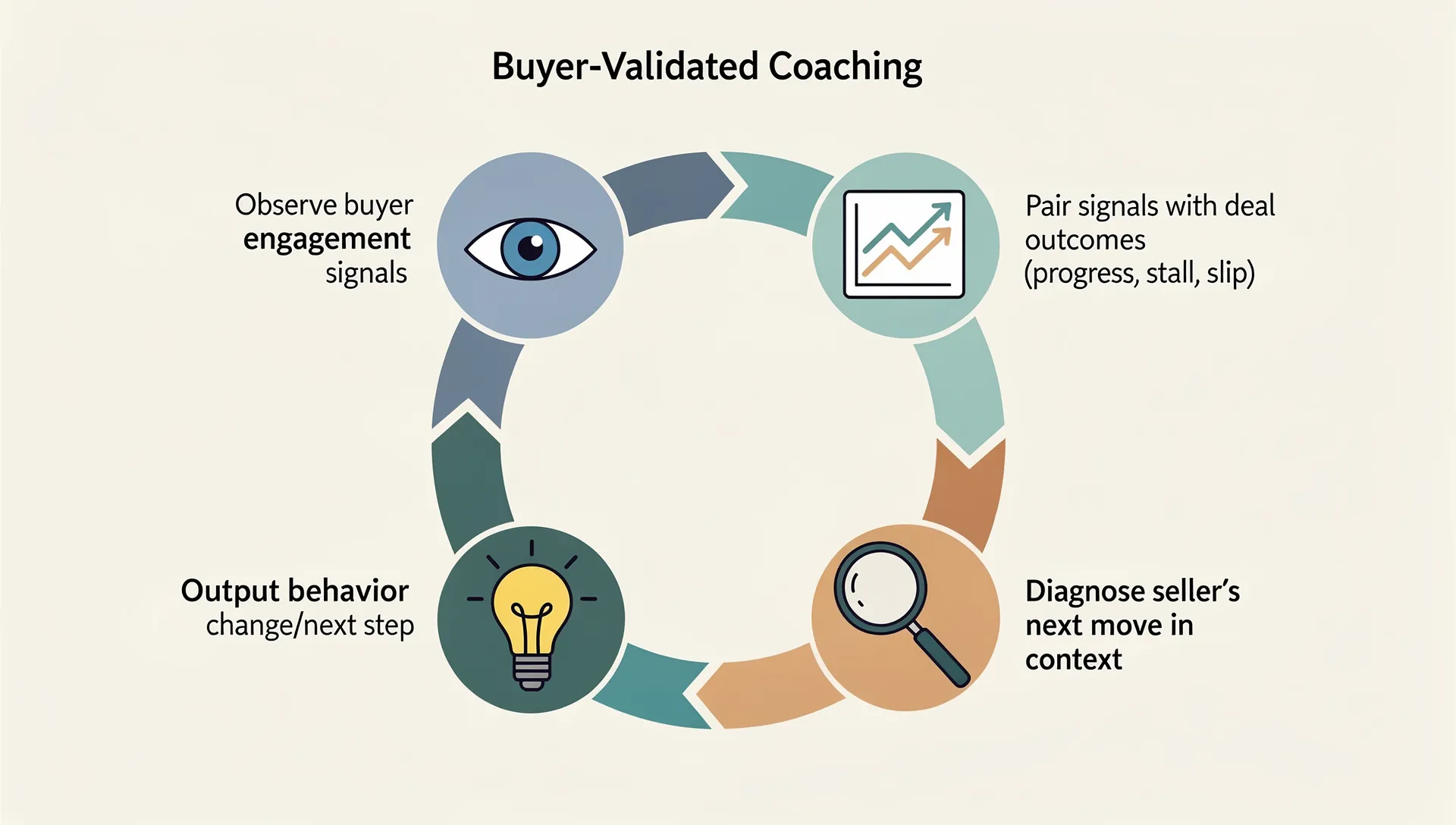
Buyer-Validated Coaching becomes powerful when it is operationalized into a repeatable loop.
- Observe buyer engagement signals.
- Pair those signals with deal outcomes (progress, stall, slip) over time.
- Diagnose the seller’s next best move in context.
- Output one behavior change or the next step the rep can act on immediately.
AI is well-suited to automating steps one through three, so reps and managers can focus on step four: choosing and executing the right move.
Buyer Engagement Signals That Actually Matter
Buyer engagement is not a feeling. It is observable behavior.
Buyer engagement signals worth coaching to include:
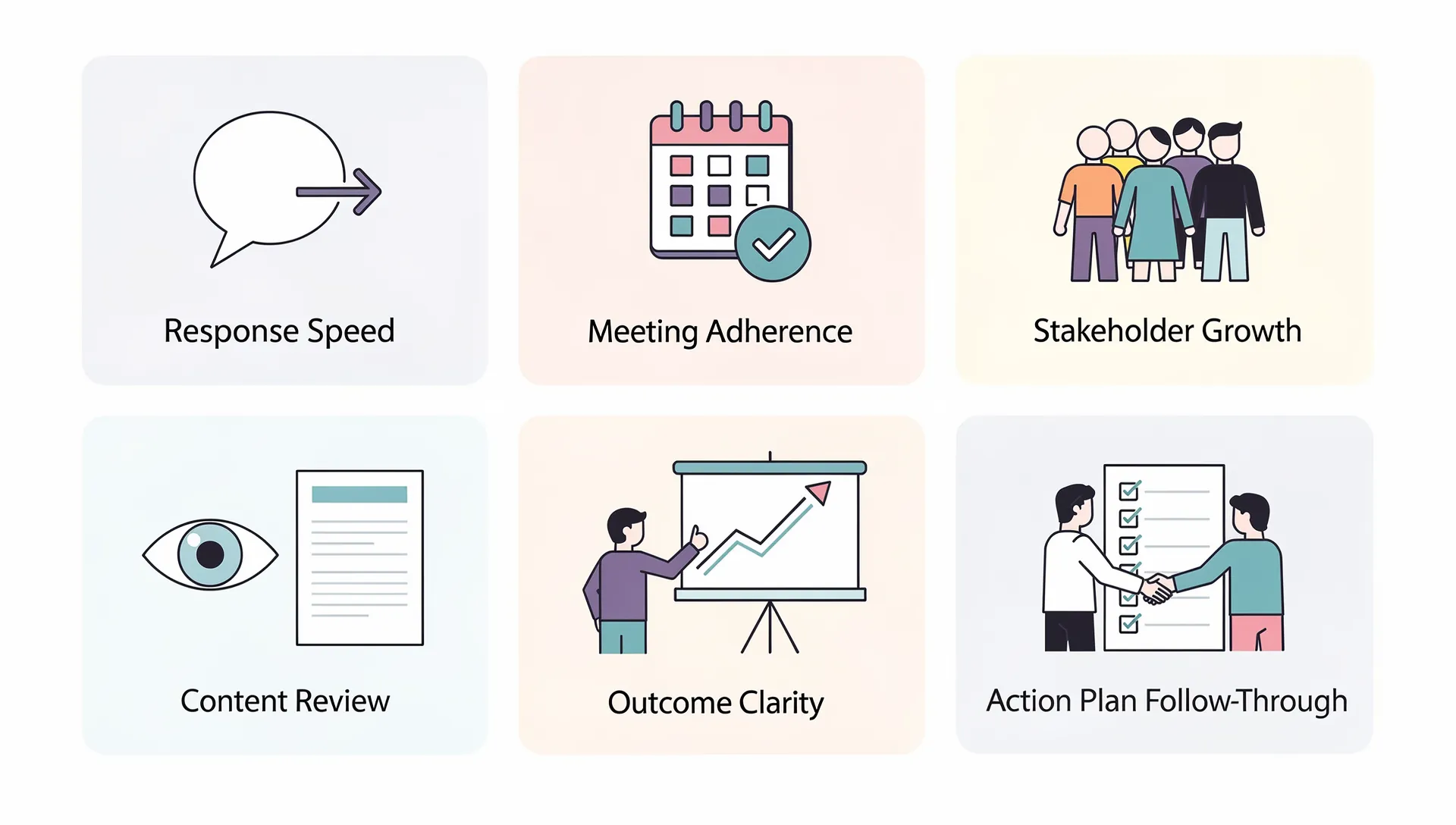
- Response behavior, such as how quickly they respond and whether their responses move the deal forward.
- Meeting behavior, such as whether meetings are kept or repeatedly postponed.
- Stakeholder expansion, such as whether your primary contact invites additional colleagues.
- Content engagement, such as whether buyers review what you send and ask more informed questions over time.
- Clarity behavior, such as whether they can articulate measurable outcomes.
- Mutual action plan follow-through, such as whether they complete the internal tasks they agreed to.
These signals are valuable because they are hard to fake. They help you avoid confusing “polite” with “committed.”
If you want a deeper exploration of why deals stall even when reps “did everything right,” link out here: buying experience breakdowns that stall deals.
What “Personalized AI Coaching” Really Means
Personalized coaching is not “a nicer summary.” It is coaching that adapts across three dimensions:
It is personalized to the rep. A rep who is strong in demos but avoids hard questions needs a different coaching plan than a rep who is excellent at rapport but weak at qualification.
It is personalized to the situation. Coaching must reflect the stage, persona, deal size, and complexity of the buying committee.
It is personalized to outcomes over time. Coaching should evolve as the system learns what works in your environment and how buyers engage when a deal is healthy.
Intersight is built on this principle. We aim to make coaching sharper over time by tying it to objective conversation evidence, observable signals, and outcomes rather than generic heuristics.
When Humans Should Stay in the Loop
AI expands access to coaching, but it does not replace human leadership.
Managers matter most when:
- A rep is new and needs structure, repetition, and confidence.
- A rep struggles with communication or process issues that require nuanced feedback and accountability.
- Self-directed coaching has not driven improvement, and deeper intervention is needed.
- The barrier is mindset (fear of asking hard questions, conflict avoidance, or philosophical disagreement with the company’s strategy).
While AI can raise the coaching floor, only managers can raise the ceiling.
How to Apply Buyer-Validated Coaching
Buyer-Validated Coaching is the north star: coaching grounded in buyer engagement signals, deal outcomes, and seller behavior.
You can apply it immediately, even if not all signals are currently tracked and analyzed by AI.
For reps: a 5-minute Buyer-Validated self-check (after any meaningful call)
1) Pick one outcome you want from the next interaction.
Make it concrete. Examples: “confirm measurable success criteria,” “get stakeholder expansion,” or “determine if this deal is real.”
2) Check three buyer signals (no guessing).
Choose the three that are easiest to observe right now:
- Are replies speeding up or slowing down?
- Are meetings being kept or postponed?
- Are new stakeholders joining, or is it still one thread?
- Are they engaging with what you send (responding with specifics vs “thanks”)?
- Can they articulate success criteria and how they’ll be measured?
- Are they completing the internal tasks you agreed on?
3) Ask one Buyer-Validated question next time.
Pick just one and use it verbatim:
- Success criteria: “When this works, what will be measurably different 60–90 days from now?”
- Stakeholders: “Who else needs to weigh in for this to move forward, and what will they care about most?”
- Reality check: “What internal step has to happen before you can commit to the next meeting?”
- Disqualifier: “If this isn’t a priority this quarter, what would stop it from happening?”
If your “one thread” problem is really a champion problem, consider how to build stronger champions in our article: build a champion (and sell with them).
How Intersight fits: Intersight helps you anchor this self-check in evidence from your buyer conversations (questions asked, concerns raised, next steps stated) and what’s still missing to move deals forward (based on similar deals won by your colleagues within your company).
It then helps you translate into sharper follow-up materials and messages, specific agenda items for future meetings, and cleaner deal updates.
For managers: a 15-minute “coaching triage” you can run every week
This is designed for real life: limited time, lots of deals, mixed rep skill levels.
1) Choose who to coach based on evidence, not noise.
Pick 1–2 reps where deals show warning signs: repeated slips, stalled stages, no stakeholder expansion, or unclear success criteria.
2) Choose one coaching theme per rep.
Your goal is not to “fix the rep.” It’s to choose the one skill most likely to change outcomes this week. Common themes:
- Qualification depth
- Success criteria clarity
- Stakeholder mapping/champion building
- Risk surfacing and mitigation
- Next-step control (clear buyer tasks)
3) Run a 10-minute coaching conversation that creates one behavior change.
Use this structure:
- “What changed in buyer engagement?” (rep answers first)
- “What do you think caused it?” (rep self-diagnoses)
- “What’s one move you’ll make next?” (choose one behavior)
- “What’s the exact question you’ll ask?” (write it down)
- “What proof point will we look for next week?” (stakeholder added, success criteria defined, buyer task completed)
How Intersight fits: Intersight helps managers avoid “listen to more calls” coaching. It surfaces high-signal moments and recurring themes from conversations and actual buyer reactions to reps’ messages. It helps translate them into specific coaching prompts, highlights skill gaps and development opportunities tied to buyer engagement and deal outcomes so that managers can coach to patterns, not anecdotes.
What to Look For in AI Sales Coaching Software
Many tools claim similar features. The differentiator is not the checkbox. It is execution quality.
Look for systems that:
- Use buyer engagement signals and deal outcomes, not just transcript analysis.
- Retain context across meetings and deals so guidance stays relevant.
- Translate insight into specific subsequent actions and draft execution assets, not just analytics.
- Give reps control and privacy so coaching feels supportive rather than shaming.
- Give managers a trend view over time and clear prioritization so time is spent where it matters.
Intersight focuses on connecting conversations, email threads, buyer engagement signals, and deal outcomes into a coaching loop that produces more effective execution: better next steps, better qualification, and more accurate deal reality in CRM.
Outcomes AI Sales Coaching Should Improve
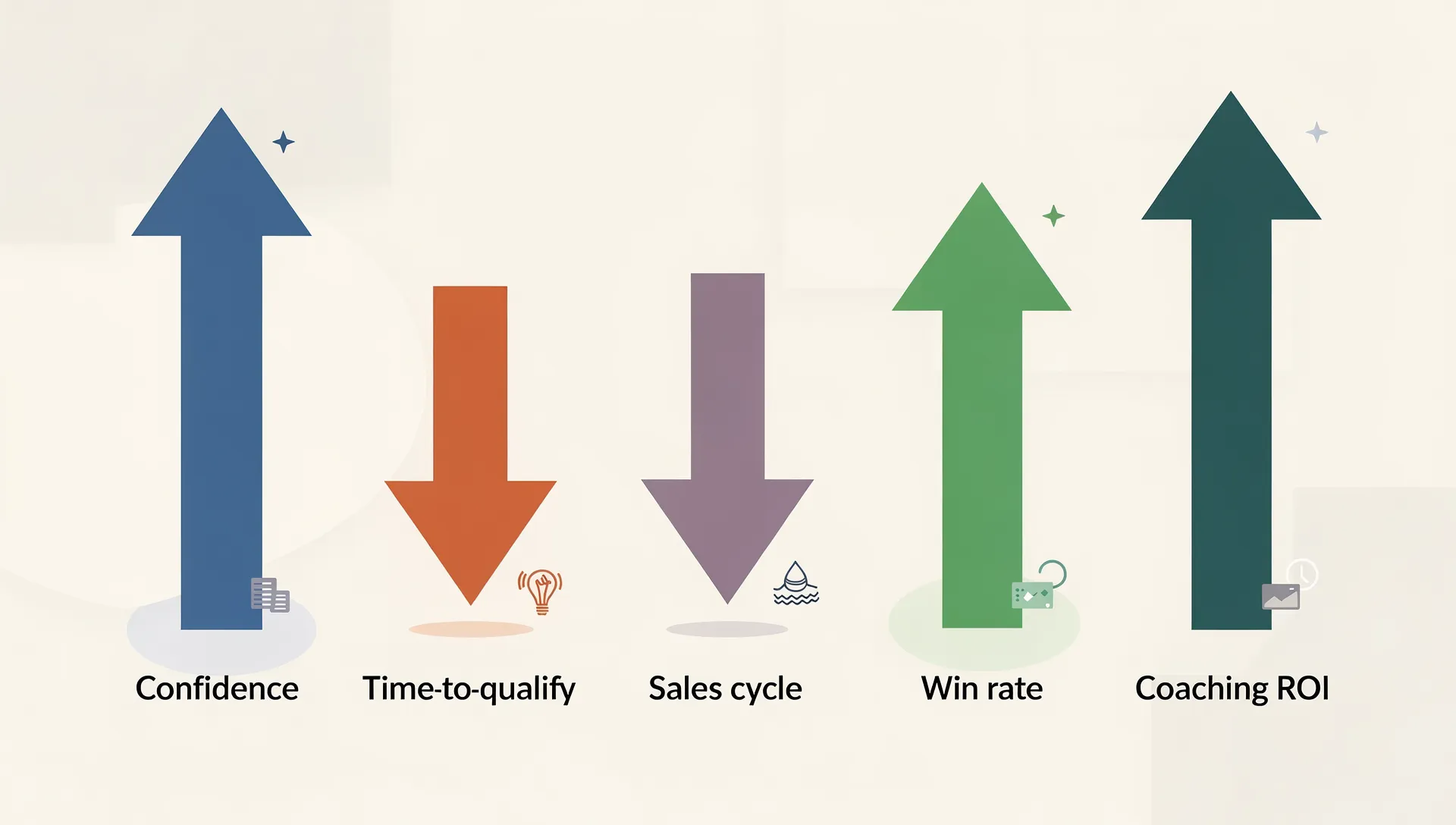
If AI coaching is working, you should see measurable improvements over time:
- Reps build confidence because feedback becomes more supportive, specific, and private.
- Reps qualify faster because they learn to ask sharper questions earlier.
- Deals move faster because success criteria, stakeholders, and next steps become clearer.
- Win rates improve because risks are identified earlier and mitigated deliberately.
- Managers become more effective because coaching time is focused on the highest-leverage themes.
A Better Standard for Coaching
The future of AI sales coaching is not surveillance. It is support.
It is a system where every rep can get job-specific coaching on demand, without shame, and where managers can invest limited time where it actually changes outcomes.
Buyer-Validated Coaching is a practical standard for that future. And it is the standard Intersight is building toward: a coaching loop that turns evidence into action, and action into better outcomes.
FAQ
Is AI sales coaching the same as conversation intelligence?
Not exactly. Conversation intelligence captures and analyzes conversations. AI coaching uses conversations, buyer engagement, and outcomes to recommend behavior change and next actions.
Can AI coaching replace sales managers?
No. It should give reps self-serve support and help managers prioritize and coach more effectively. Humans remain essential for confidence, accountability, and deeper skill work.
Is AI coaching just call scoring?
It does not have to be. Buyer-Validated coaching uses buyer behavior and deal outcomes to keep coaching relevant and action-oriented, not judgmental.
What makes coaching credible?
Coaching becomes credible when it is validated by buyer signals, grounded in deal outcomes over time, and specific enough to act on immediately.
See How Intersight Can Power Revenue Growth
Want to see how Intersight can drive revenue growth and predictability for your organization?